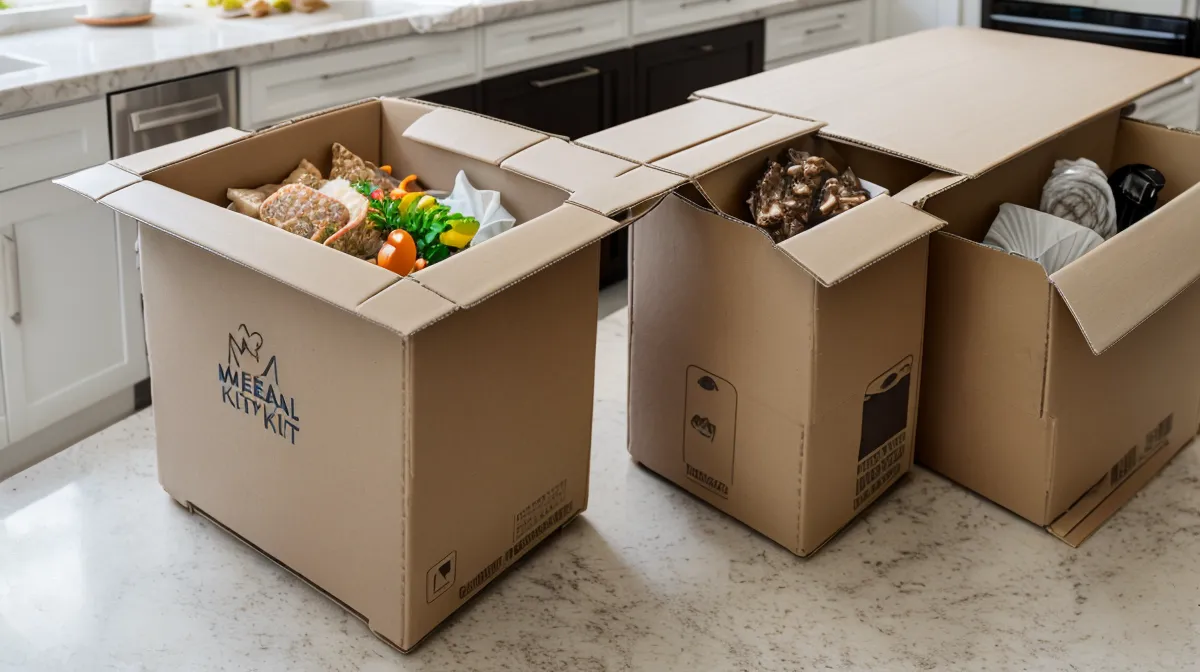
Six. That's how many meal kit services have taken a turn in our fridge, and cost-per-plate is the only math that has ever settled an argument in this house about which one to keep. Comparing meal kits is easy on paper; running that comparison as a working parent on a hybrid-work schedule is a different exercise, because the receipt total is never the whole budget-dining picture — what your evening actually costs you is the number every marketing photo leaves out.
Quick disclosure before any of the comparisons: the meal kit links on this page are affiliate links, and I earn a commission if you sign up through them — Home Chef and Tempo both pay 20 percent, Blue Apron pays 22 percent, and Thrive Market pays 25 percent. None of that changes your price, and it hasn't bought a good review from me; I've cooked out of every one of these boxes in my own kitchen, misses included. If you want the one that has actually held up in our rotation, Home Chef is where I'd point a friend first.
Cost-Per-Plate in a Hybrid-Work Household Has to Include Your Time
Cost-per-plate looks simple on a pricing page — box total divided by servings — until you count the unpaid labor between delivery and dinner. A kit running about a takeout dinner cheaper a week can still be the pricier option if that discount arrives as raw, unwashed vegetables and a recipe card that assumes someone is standing by as sous chef. Rating a box on price alone is like rating a sprint on story points and ignoring how many meetings it took to ship it.
Long before there was a six-kit rotation, freezer meals seemed like the obvious fix — a Saturday spent pinning recipes and portioning a week's worth of dinners into the freezer. The kids refused almost everything once it actually hit a plate, and most of it sat in the freezer door until it got tossed. That failure is what pushed the search toward kits that at least guaranteed the ingredients matched a recipe somebody else had already tested on their own picky audience.
A friend down the street spends her Saturday mornings at a pottery studio on State Street and calls that her reset button; mine looks more like not standing over a stove at six wondering what's thawed. That's not a knock on pottery — it's just a reminder that "cheap" only means something once it's measured against what a Tuesday actually demands, not against a hobby with a kiln.
As someone who spends the workday thinking in inputs, outputs, and defects, software quality assurance is not a glamorous job title, but it does train you to distrust a number that looks too clean. A box advertising the lowest cost per plate is usually pushing that savings onto the labor column instead of the receipt — fast-prep labels, pre-washed produce, and pre-portioned proteins all cost a bit more per unit, and every one of those upcharges buys back a slice of the gap between school pickup and a client call starting back up.
Is Home Chef Worth the Math It Promises?
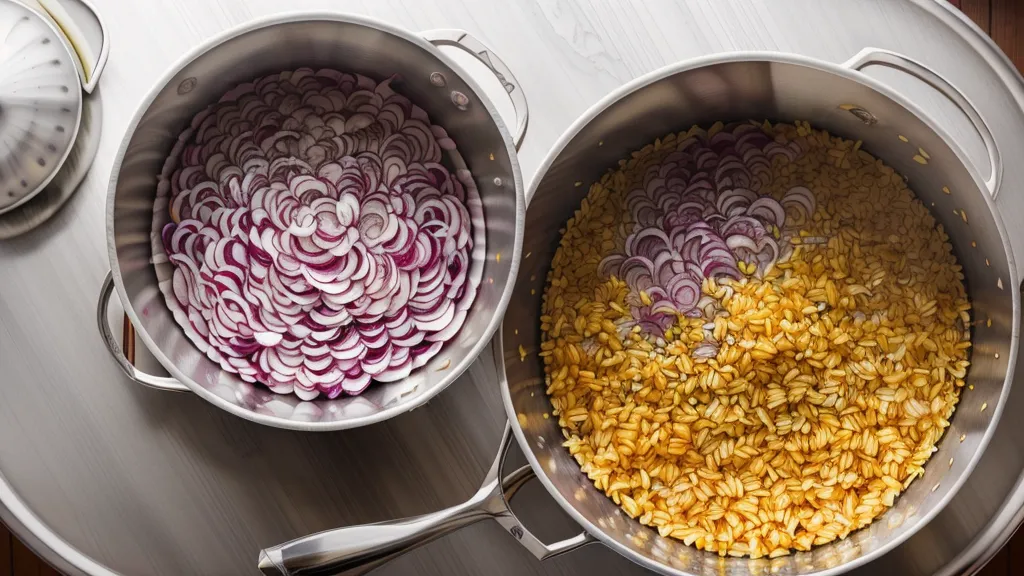
Home Chef became the default rotation during the busiest stretch of the school year, and not because the food is fancy — the fast-prep labels are the entire draw. The menu usually runs twelve to fifteen recipes a week, and hunting for the ones with minimal knife work turns grocery-and-menu day into an actual strategy session instead of a scroll.
Whether the kids actually eat what lands on the plate is its own separate question worth asking about any kit, and Home Chef's more kid-neutral recipes clear that bar more often than the others do. Portion sizes mostly match what's promised, except on the heat-and-eat options, which run tight once you're feeding two adults and two growing kids off the same tray. Some recipes also lean heavier on dairy and red meat than the box photo implies, which matters the week a kid decides cheese is suddenly the enemy.
Whether the printed prep time is realistic is a rabbit hole of its own, but the fast-prep label at least narrows the odds of a fifteen-minute box turning into something closer to a forty-five-minute one. For a household running more than one kit at once, Home Chef vs Blue Apron is the head-to-head that usually settles which box gets handed the harder weeknight.
Can You Pause or Skip Without a Five-Email Fight?
A reader named Priti Mehrotra, from a Madison suburb, emailed a version of this question after she found the site during a HelloFresh pause window of her own. Her rule of thumb has nothing to do with the price tag — she judges a kit almost entirely by how many pans a recipe dirties — and she wanted to know which service made pausing painless once travel or a heavier stretch of work got in the way.
Pausing is where Home Chef has been the least stressful of the six; the settings are simple enough that I actually remember to use them before a trip, which matters more for the budget than any per-plate number does. A paused week is the cheapest week of all, and it's the line item none of these marketing pages ever put in a comparison chart.
Blue Apron's Recipe Discovery Versus a Tuesday Deadline
Blue Apron's whole pitch is recipe discovery, and on a Friday with nowhere to be, that pitch holds up — the technique-teaching sleeve cards are good enough that the older kid actually reads them out loud. On a Tuesday, discovery mostly just means more dishes, and the prep times skew longer than the box claims almost every time.
More than once the timer's gone off while the sauce is still soup-thin, nowhere near the glossy reduction the recipe card promised, and dinner slides another ten minutes past when everyone was already hungry. If you're building a rotation instead of picking one winner, Blue Apron earns its spot as the weekend box, not the one you lean on when you're already drained from a day of supply chain management meetings or a sprint retro that ran long. I've learned to save it for weeks when the client load is light enough that a new knife cut feels like a bonus instead of one more task, and the full accounting is in my eight-box spring rotation review.

What Do You Do on the Nights Nobody Can Cook at All?
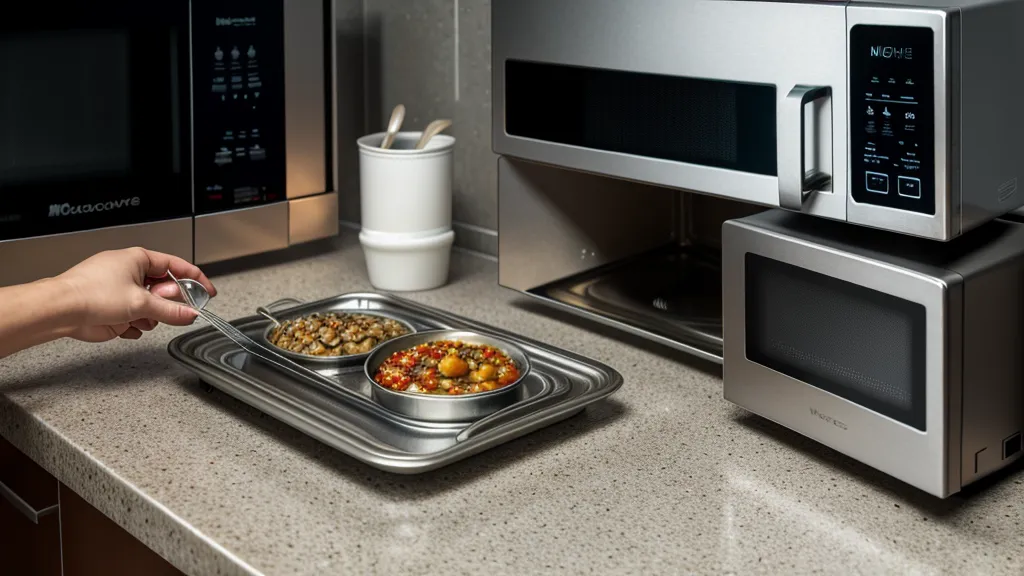
Some nights the honest answer isn't a fifteen-minute kit, it's nothing — a client call runs right up to dinner and even a fast-prep box is too much to ask of anyone. Tempo by Home Chef exists for exactly that gap: microwave-first, single-serve, no cutting board and no extra pan to dirty, which is the entire pitch as far as Priti's rule is concerned.
It sits on the fully-prepared end of the spectrum rather than the cook-it-yourself end, and that distinction — prepared meals versus from-scratch kits — probably deserves its own comparison rather than a single paragraph here. Where it fits into a hybrid-work week's actual logistics, which nights, whose calendar, how far ahead you have to order, is really its own conversation too. What I will say is that it shows calorie counts right on the menu page before you order, which is more than most of these services offer, and the portions are sized for one adult eating late rather than a second helping for anybody else.
For the stretch a client call ran long and takeout wasn't in the budget, Tempo by Home Chef was the tactical retreat, and the full breakdown of that week is in my Tempo survival strategy review.
Thrive Market Is Pantry Backup, Not a Meal Kit
Thrive Market never pretends to be a meal kit, and treating it like one is the fastest way to end up disappointed by it. It's a pantry and freezer backup, the thing that fills the gap the week a box arrives late or the whole menu is ingredients nobody in the house will touch.
Before Thrive earned that role, the backup plan was a detour through Hilldale Shopping Center on Midvale Boulevard on the way home from pickup, grabbing whatever looked fastest off the shelf. The membership fee only pencils out if you're already buying two or three boxes of snacks and staples a month regardless — for a household doing that anyway, it mostly replaces a stop you were already making. The allergen and dietary filters also catch things a regular grocery aisle label doesn't always spell out, which matters more on the week you're testing a new brand with a kindergartner's stomach on the line.
If you're in the Midwest and weighing whether it earns a spot in your own rotation, I wrote up the specifics in Thrive Market for busy families.

Wisconsin Summers Run Their Own Quality Control on These Boxes
Madison summers do their own quality control on top of whatever the kit promises. A porch running into the low eighties for a few hours can turn a box of chicken into a science experiment if a delivery sits too long, so timing the drop for a day someone is actually home matters more than which insulation liner a company brags about. Most of these services use similar insulation and ice packs, and in practice they hold up about as well as each other.
None of this is medical or nutrition advice — I'm not a dietitian, just someone who works in tech and wants dinner to stop being the daily emergency. Specific allergens or dietary needs are a conversation for your own pediatrician, not something a meal kit comparison should be deciding on your behalf.
The Real Verdict on Cost-Per-Plate
There's no spreadsheet at the end of this — I've never kept one that would survive an audit, and I'd be skeptical of any article that claimed it had. What actually decides cost-per-plate in our house is whether a box gets opened before the cilantro turns to slime in the crisper drawer, because a cheap plate that gets thrown out costs more than a pricier one that gets eaten.
The clearest sign the rotation finally works isn't a number at all. It's that my partner starts the rice before I've even opened the box on some Tuesdays now, because the night has a shape neither of us has to negotiate anymore.
For our house, Home Chef is still the one that survives past month two without turning into a second job, and if you're tired of the Tuesday scramble, it's the one I'd try first. The fast-prep options cost a little more per plate, and they earn it back the first night you get dinner on the table before the bath-time meltdown starts.