A cook-from-scratch kit and a heat-and-eat tray are not the same product wearing two different price tags — one hands you raw chicken thighs and a recipe card, the other hands you dinner. That distinction is the whole reason this meal kit review exists: three years into juggling prepared meals and full cook-from-scratch kits as part of a hybrid work life, with two kids and about twelve minutes between closing my laptop and someone asking what's for dinner, I've stopped caring which box looks better in the marketing photos and started caring which one actually gets plates on the table. Working parents ask me some version of the same handful of questions every week, so here they are, answered straight.
Quick disclosure before the questions start: the links to these meal kits on this page are affiliate links, and if you sign up through one, I get a referral fee at no extra cost to you. That doesn't change any of the answers below — I've had all four of these in my own kitchen at various points, sometimes two of them arriving in the same week when I forgot to hit pause.
Is a Prepared Meal Tray Really Different From a Cook-From-Scratch Kit?
Home Chef and Blue Apron ship the raw ingredients and a recipe card; you handle the cutting, the seasoning, the pan-watching, and the actual dishes afterward. Tempo by Home Chef skips all of that — the tray arrives fully cooked, goes in the microwave for a few minutes, and the only thing you wash is a fork. That's the entire prepared-versus-scratch divide in practice: one is a cooking task you still have to do yourself, the other is a reheating task someone already finished for you. Tempo leans on something called Modified Atmosphere Packaging, which is apparently the reason the chicken doesn't taste like a defrosted dinner from decades ago, though I don't fully understand the science behind it.
The bigger logistics question — how something like Tempo actually earns a permanent spot in a hybrid week instead of just bailing you out one bad evening — is one I've broken down in more detail elsewhere, so I won't rehash the whole case here.
If the real question is can I get food on the table without touching a stove, the prepared tray wins outright. If it's do I want my kid standing next to me learning why you don't crowd a pan, a cook-from-scratch box wins, and no prepared tray will ever replace that.
Cook-From-Scratch Kits Still Teach the Kids Something
Blue Apron earns its keep on nights when I actually want the kids involved, not just fed. My older kid picked up a Blue Apron card without being asked and read the steps out loud, calling out when to flip the chicken like he'd appointed himself the timer for both of us. Whether the portion on the plate matches what the box promises is its own argument between Home Chef and Blue Apron that I've settled elsewhere; here I'll just say the technique cards are worth it even on the nights the portions run a little tight. Cooking times on Blue Apron's recipes tend to run past what the box claims, which matters more on a Wednesday after soccer practice than on a lazy Sunday.
What Happens If You Forget to Pause a Box?
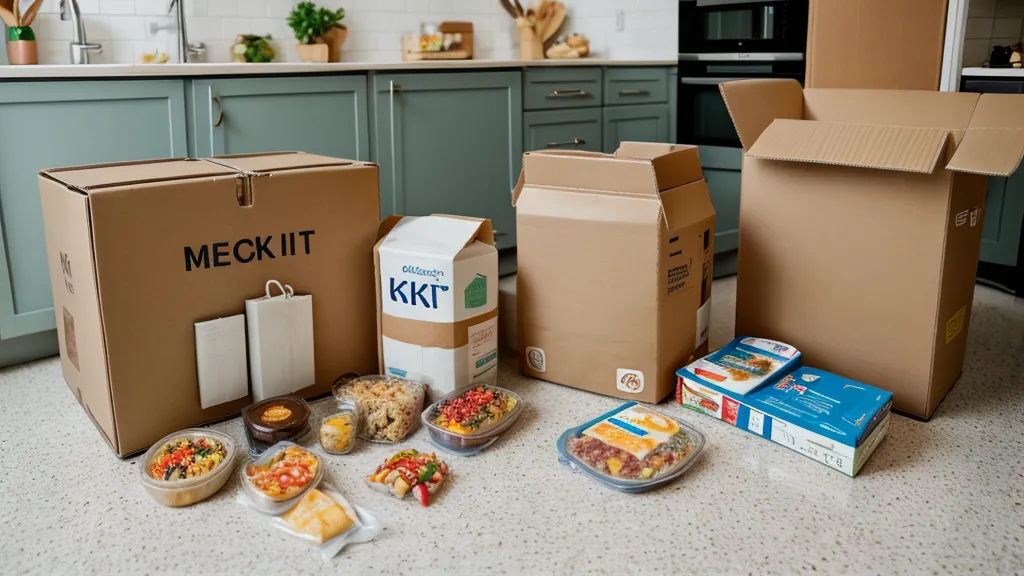
Forget to log in and hit pause, and Home Chef will happily ship you two boxes in the same week — I found this out in late winter when a stack of insulated liners and cardboard took over the entryway before I'd unpacked the first one. One box had clearly sat on the porch through an unseasonably sunny afternoon, because it still held a faint cardboard warmth by the time I carried it in. Pausing without a five-email fight is its own topic I've covered in detail elsewhere, but it's worth knowing going in that not every service makes it equally painless, and Home Chef is one of the better ones once you find the right screen. Home Chef's real strength is volume — a rotation of roughly twelve to fifteen recipes a week, which gives a picky household options beyond the one recipe nobody vetoed.
The Pantry Backup Nobody Talks About
Thrive Market isn't a meal kit at all, and that's exactly why it stays in the rotation once Tempo has covered the nights nobody has energy left. Thrive Market fills the gap between kit weeks with pantry staples and frozen entrees, plus better allergen filtering than most grocery delivery apps I've tried. A membership only pays for itself if the family is already buying two or three boxes a month between the meal kits, which, some months, we absolutely are. If the pantry-and-snacks side of things interests you more than the dinner side, I've written separately about Thrive Market Grocery Delivery for Healthy School Lunch Snacks.
Which One Actually Gets the Kids to Eat Dinner?
Kid-acceptance rate is a mouthful, but every parent running this rotation is quietly tracking it in their head — which dish gets eaten without negotiation and which one gets pushed to the side of the plate. That's a big enough question on its own that it deserves its own comparison, so here I'll just say acceptance tracks more with the specific dish than with the brand behind it. After an afternoon at the Tenney Park playground along Lake Mendota, both kids come home too hungry to negotiate about much of anything, which is honestly the best-case scenario for getting a vegetable eaten without a fight. A friend of mine spends her weekends elbow-deep in clay at a pottery studio on State Street, and I used to feel a little envious of that kind of unstructured Saturday until I remembered her kids are old enough to feed themselves.
Meal-Prepping It Myself Never Actually Worked
Yes, I tried that first, and it didn't work. One fall I pinned an entire board of freezer-meal recipes, spent a whole Saturday portioning and labeling bags for the chest freezer, and by Wednesday the kids had refused every single one of them, which meant a day off had turned into food that went straight into the trash instead of onto plates. That's the actual reason I pay for meal kits instead of just being more organized about my own cooking — organization was never the problem, buy-in from two opinionated kids was. Nobody wants to hear that the fix for dinner chaos is just try harder, and in my case it genuinely wasn't.
Building a Rotation That Survives a Bad Week
Realistic prep time is where every one of these boxes gets a little dishonest, and it's a big enough topic that I already dug into the stopwatch math in Testing Home Chef: A Software QA's Twelve-Week Survival Log, so I'll spare you the repeat here. What I will add is that a reader named Priti Mehrotra, from a Madison suburb, emailed a question a while back that made me realize I wasn't actually tracking how many pans piled up per box — I am now, mostly because of her. Between Tempo covering the nights nobody has energy left, Home Chef covering the nights there's actually time to cook, Blue Apron covering the nights I want the kids at the counter, and Thrive Market covering the pantry gaps, the rotation survives weeks that a single subscription never could.
How the Four Compare at a Glance
Here's the version of this I'd hand a friend who just wants the short answer without reading the whole page.
| Service | Best For | Prep Commitment | Kid Acceptance |
|---|---|---|---|
| Tempo by Home Chef | Late nights with zero energy left | A few minutes, microwave only | Hit or miss — single-serve trays make swapping easy, but options are limited |
| Home Chef | A real weeknight rotation | Real stovetop time, still doable after work | Strong — enough recipes that something usually lands |
| Blue Apron | Teaching kids kitchen technique | The longest of the four, plan around it | Lower — bolder flavors get vetoed more often |
| Thrive Market | Pantry and freezer backup | No cooking, just restocking | High — mostly familiar snacks and basics |
So Which One Actually Wins for a Hybrid Work Week?
For the three days a week I'm on video calls from the same corner of the kitchen, Tempo by Home Chef wins, not because it's fancier than the others but because it's the only one that treats dinner like a task that just needs to get cleared, not an experience that needs curating. It costs about the same as a takeout dinner and asks nothing of me except a working microwave and two minutes of patience. None of the four are going to be perfect on a bad week — you'll still get a wilted herb packet or a liner that leaks, and the recycling bin will still fill up faster than you'd like — but having one option in the fridge that requires zero decisions is worth the subscription on its own. If lunches during a work-from-home day are the harder puzzle, I've also put together some Quick Healthy Lunch Ideas for Hybrid Work from Home Days that don't need a microwave at all. Check with your own pediatrician or a registered dietitian about anything specific to your kids' diet — I can only tell you what got eaten at my table, not what should get eaten at yours.