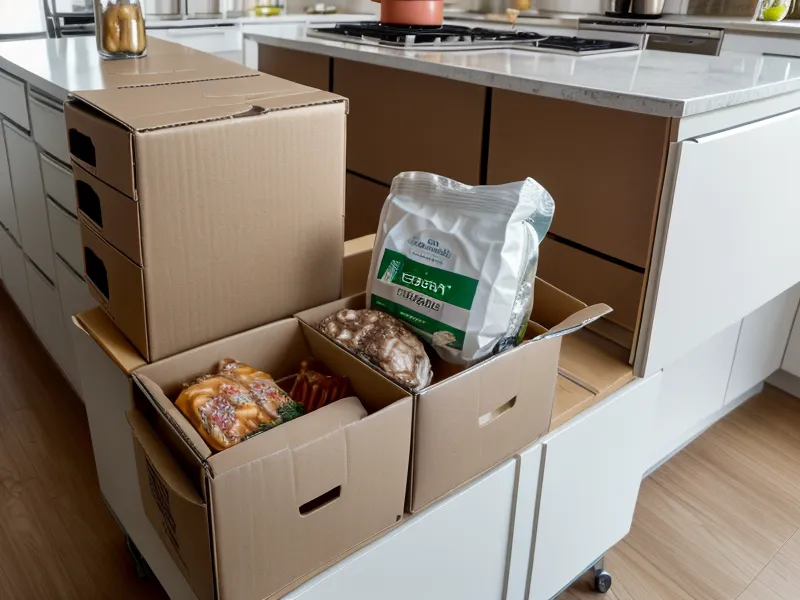
My son had already gone back for a second helping of broccoli before I'd pulled up my own chair — the tray was scraped clean while I was still portioning everyone else's plates. That kind of thing never happened during the stretch when I tried batch-cooking every Sunday for the whole week ahead, because by Thursday I'd run out of ideas and the containers all tasted like the same three spices. This Home Chef meal kit review isn't a chef's take — it's a working mom's dinner-rush data, collected over three years of hybrid workdays in Madison.
Quick disclosure before the Q&A starts: every meal kit link on this page is an affiliate link, and if you sign up through one, I get a referral payment at no extra cost to you. Your first-box promo stays whatever the kit is currently running, and I've tested each one of these during my own dinner-rush shifts — the kits that stopped earning a spot in the rotation still get mentioned here next to the ones that stuck. People ask me some version of the same handful of questions about Home Chef, usually right after I mention it in a coworker Slack thread, so here's what actually happens, one question at a time.
Does Home Chef Actually Deliver on Its Fifteen-Minute Promise?
Short answer: sometimes. Home Chef labels a chunk of its twelve-to-fifteen recipe rotation each week as 'Fast-prep,' and roughly half of those genuinely land near the printed time. The other half is where the QA brain in me kicks in; I spend my working hours hunting for the gap between what a feature promises and what a user actually experiences, and in this kitchen the gap is almost always the clock printed on the recipe card.
One Tuesday last fall, the card read fifteen minutes for a sheet-pan chicken dish with a citrus glaze, and it took thirty-five. The glaze needed more reduction time than the card accounted for, my stovetop apparently runs cooler than whatever test kitchen timed it, and by the time plates hit the table both kids had slid past hungry into the whining-about-everything phase. A fifteen-minute kit that actually runs thirty-five minutes isn't a small miss — it's the meeting that was supposed to be an email, the kind of overrun that pushes bath time and bedtime back by exactly the margin it stole from dinner. The rule I use now is simple: if a card promises anything under twenty minutes, I mentally add ten before I start it, and I don't start a 'Fast-prep' box less than forty minutes before food needs to be on the table — that's the real number, not the one printed on the sleeve.
The Box Showed Up Warm Once, and Here's Why That Mattered
Normally the first sign a box survived the delivery truck is the cold gel pack pressing through the cardboard flap before the tape is even off, a small, reassuring chill against my palm. One delivery this spring skipped that step entirely. The flap opened to lukewarm ice packs and a chicken tray closer to room temperature than refrigerator temperature, and it had clearly sat on the porch through a warm afternoon before I got back from pickup.
This is the one part of the routine where I don't go by feel: the USDA defines the temperature danger zone as 40°F to 140°F, and perishable food isn't supposed to sit in that range for more than two hours total, or more than one hour if the air around it tops 90°F. That chicken had been out past both windows by the time I checked it, so it went straight into the trash instead of a pan, no debate necessary.
Is There Actually Enough Food for Four People?
Not always, and portion size is really its own can of worms — the short version is that the 'Heat & Eat' and 'Express' trays run closer to one-and-a-half servings than two once you're feeding two growing kids. A reader named Augustin wrote in a while back asking whether kid-acceptance held up the same way across households, and honestly it depends more on what's already in your kids' rotation than on the box itself. What I've settled on is treating Thrive Market as the backstop: their pantry staples fill the gap on nights a tray runs short, and the membership pays for itself faster than expected once you're already buying two or three boxes a month most weeks. I laid out the actual math in my Thrive Market review for busy families.
More than once that's meant scrambling eggs for myself after the kids cleaned out a tray meant to stretch further than it did. Our pantry door has never closed flush — the frame warped years ago — and packing it with backup rice and pasta this past year hasn't helped.
Missing the Skip Window Cost Us a Box Nobody Wanted
The skip toggle in the Home Chef app works fine right up until you forget the cutoff, which is exactly what happened the week we left for a trip up north without pausing the queue first. The order locked in two days before we left, the box sat on the porch through a week with nobody home, and a charge showed up on the card for food nobody ate. Home Chef does let you pause and resume as the family schedule shifts, but only if you catch the window before it closes — miss it once and you're paying for groceries headed straight for the trash. Cleo, a coworker who sits two desks over on the days we're both in the office, heard that story and asked, flatly, how many taps it actually took to cancel; she won't touch a subscription that needs more than four clicks to kill.

I did try Tempo by Home Chef for a stretch when the workload got heavy enough that even the skip toggle felt like one more task to manage, and it swaps out the cooking step entirely for whoever's eating late, which matters more on a week already stacked with school pickups, soccer practice down at the Garner Park fields on the south side, and late client calls than it does on an ordinary one. It's built for a single adult eating solo, not a family plate, which is really a from-scratch-versus-already-made question more than a Home Chef one — I laid out that comparison in my comparison of prepared meal delivery options.
Sending an Adventurous Kit to Two Kids Who Just Wanted Pasta
Curiosity got the better of me once, and I swapped a normal week for one of the more adventurous options instead of the usual Fast-prep lineup — a dish built around a sauce neither kid had seen before, with a vegetable my older kid takes personally. Both plates came back nearly untouched, and dinner ended with cereal as the backup plan anyway, the exact scenario this whole rotation exists to prevent. Blue Apron leans into that kind of recipe discovery on purpose, and their sleeve cards carry real technique instructions that my older kid actually reads, which is more than I can say for most recipe inserts, but the cooking times run long on a weeknight compared to what the box claims, and asking two kids used to predictable dinners to also be adventurous on a Tuesday is asking too much twice in one night. For the nights where 'Fast-prep, no surprises' is the entire assignment, I've written up the specifics in my Home Chef Oven Ready meals review.
Who Home Chef Actually Works For
After three years of rotating through six different services, the honest read is that Home Chef wins the predictability contest, not the culinary one; it doesn't crash on a Tuesday when I'm running on no sleep, and the format is simple enough that my husband, who treats toast as a personal achievement, can run a box without texting me a single question from the kitchen.
Choose it if what you need is a stable weeknight default with a skip toggle that mostly behaves; look elsewhere if what you actually want is a kitchen adventure, or if two hungry kids need more food than a 'two-serving' tray actually holds. My rule after all this testing: keep Home Chef in the rotation for the weeks you can predict, keep a pantry backup ready for the weeks you can't, and never trust a printed cook time until you've run the box yourself at least once.
None of this comes from a nutrition credential or a lab, just one household's dinner rotation, so if your family has allergies or sodium concerns, check the filters on the Home Chef site and loop in your pediatrician before taking my read as the final word.