
It is late August in Madison, the kind of humid afternoon where the air feels like a damp wool blanket, and I am staring at a recipe card claiming a '15-minute prep.' My kindergartner is currently using a rogue zucchini as a lightsaber, the elementary schooler is asking for the fourth time if I have seen his soccer cleats, and my QA brain is already calculating the inevitable delay. In software testing, we call this an optimistic estimate; in my kitchen, it is just another Tuesday where the marketing photos of pristine bowls of prepped scallions feel like a personal insult.
The 15-Minute Mirage and the Zucchini Lightsaber
When a meal kit claims fifteen minutes, I have learned to translate that into corporate-speak. It is the 'quick sync' that turns into a ninety-minute post-mortem. By the time I factor in washing the produce—because even the 'pre-washed' stuff usually needs a rinse—and finding the vegetable peeler that has been repurposed as a sandbox tool, that fifteen minutes has already evaporated. Last week, during the first week of school, I timed it. Between settling a dispute over who got the red folder and answering a 'quick' Slack message from a developer, the prep alone took twenty-eight minutes. That is a 186% deviation from the stated requirement, a margin of error that would get any software build rejected.
I am not a chef. I have no nutrition credentials. I am just a mom who works hybrid from home three days a week and realized back in the spring of 2023 that something had to change. We hit a breaking point when my oldest was eating dry cereal at the counter because both my husband and I got stuck in late client calls, and the youngest was already in pajamas, crying because she was hungry. Since then, I have rotated through six different services, looking for the one that survives the reality of a Madison school night rather than the one that looks best on Instagram.
From Cereal to Subscriptions: The QA Logic of Dinner

The transition to meal kits was less about a love for cooking and more about family infrastructure. On the days I am working from home, I often have a 5 PM stand-up call that bleeds into the dinner hour. There is a specific, slightly metallic scent of the gel ice packs sweating on the linoleum as I rush to unpack them before that call starts—a sensory reminder that the clock is ticking. If the box stays on the porch too long in the Wisconsin humidity, the structural integrity of the cardboard starts to fail, which is its own kind of stress test.
Most of these services offer standard meal kit serving size options of 2 or 4, and for a family of four with two small kids, the 4-serving plan is the only logical choice. But even then, the logistics are tricky. I have noticed that the 'prep time' on the card never accounts for the 'user-provided' steps. 'Zest the lemon,' they say. 'Mince the ginger,' they suggest. These are the small frustrations—the tiny tasks that add up—that make me miss the simplicity of that emergency bowl of Cheerios, even if the nutritional value was questionable. I always tell my friends to check with their pediatrician for specific dietary needs for the little ones, as I am just over here trying to make sure everyone eats something that isn't beige.
The Hidden Cost of 'Pre-Chopped' Convenience
One of the biggest selling points of 'quick-prep' kits is the pre-diced onion or the pre-shredded carrot. From a logistics standpoint, this should be a win. In practice, it often means more plastic film to wrangle. I have become an accidental expert on low-density polyethylene, specifically the #4 LDPE classification used for many of these liners and pouches. While it is technically recyclable at certain drop-off points, it usually just ends up in a pile on my counter, a mountain of waste that mocks my attempt at a streamlined evening.
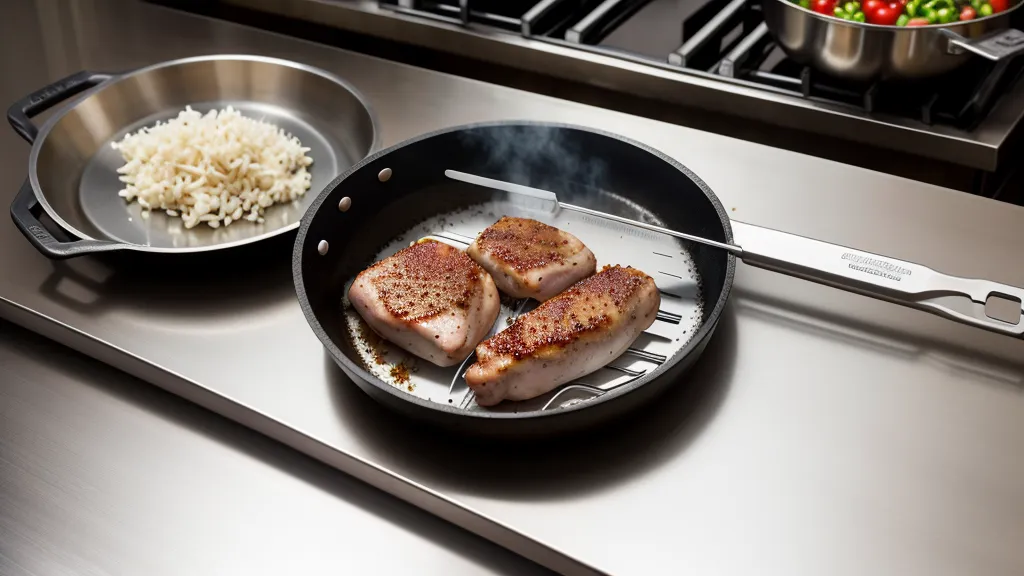
Then there is the 'one-pot' lie. The marketing photos show a single, gleaming skillet. What they don't show are the three prep bowls you used to hold the components because the recipe told you to 'set aside' the aromatics. I often feel the sharp pinch of tension in my neck when I realize a 'one-pan' recipe requires a 12-inch cast iron skillet that is currently buried in the bottom of the dishwasher, still crusted with Sunday's bacon grease. On those nights, the 'time-saving' kit feels like a bug in the system.
I have written about this before in my management of the school-year scramble, where I noted that the best kit isn't the one with the fanciest recipes, but the one with the fewest dishes. If I have to clean the food processor to make a 'ten-minute' pesto, the kit has failed the Tuesday test.
The 165°F Reality Check on a Rainy Tuesday
Mid-September in Madison often brings these sudden, gray rainstorms that turn the school pickup line into a nightmare. On one such rainy Tuesday, I was already behind. The box had been delivered late, and the chicken breasts were still slightly icy in the center. I was frantically checking the meat with a digital thermometer, knowing the food safety standards require a USDA safe internal temperature for poultry of 165°F.
The recipe said the chicken would cook in eight minutes. It took fourteen because of the lingering frost. Those six extra minutes were the difference between a calm dinner and my youngest having a meltdown because she missed her bath-time window. It is these moments where the 'gourmet' nature of a kit becomes a liability. I don't need a balsamic reduction; I need the protein to be predictable. When the delivery window slips, or the ingredients aren't perfectly tempered, the whole system collapses. This is why I have become so unsentimental about these services. If a company requires me to 'skip' or 'pause' my delivery 5 to 7 days in advance but can't guarantee a delivery window within a four-hour block, they aren't solving my problem; they are just adding a different kind of technical debt to my life.
Why the Expensive Box is Actually the Budget Option
Here is the truth I have found after a year of this: the kits with the highest upfront cost are often the ones that save me the most money. It sounds counterintuitive—especially when you are looking at the 'price per serving' metrics—but the math of a Tuesday night is different than the math of a spreadsheet. When I buy the 'value' kit that requires forty minutes of actual labor, I am much more likely to look at the pile of unchopped kale, look at my tired kids, and call for a $70 pizza delivery.
The 'premium' kits—the ones that actually arrive with everything pre-sorted and truly require nothing more than a pan and a spatula—might cost twenty dollars more per box, but they prevent the $80 impulse takeout order. Over a month, that logic holds up. I have found that balancing my rotation with services that actually respect my time is the only way to keep the grocery budget from exploding. It is about reducing the 'failure rate' of the dinner plan. If the kit is too hard to execute when I am exhausted, the kit is a waste of money, no matter how cheap the ingredients are.
I am not looking for a culinary education. I am looking for a way to get through the 5:30 PM rush without losing my mind. I’ve learned to prioritize kits with the fewest 'user-provided' steps—the ones that don't ask me to zest, mince, or flambé. I want the kit that survives the reality of a rainy Madison evening, the one that gets the kids fed and into the tub before I have to log back in for a final check on the day's code. Marketing photos are nice, but on a Tuesday, the only thing that matters is the time between the box opening and the first bite.