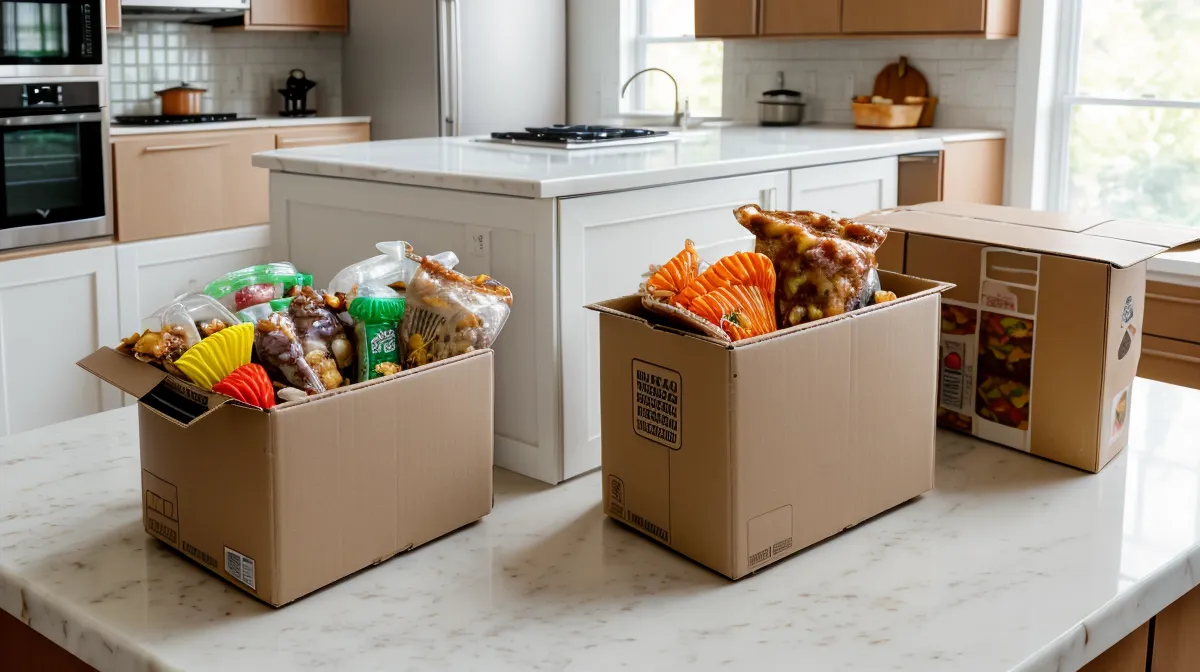
A fifteen-minute recipe card and a fifteen-minute status meeting make the same promise, and keep it about as often. That's the comparison I kept coming back to once meal kit delivery became part of our weeknight dinner routine, because before that I'd tried the tidier version of dinner planning, a full week of meals cooked every Sunday, and it worked right up until Thursday, when the freezer containers ran out of anything anyone wanted to eat and my oldest ended up at the counter with a bowl of dry cereal while I finished a QA report two hours late, a fairly ordinary bad night for a working parent.
Quick disclosure before any of the rest of this: the meal kit links on this page are affiliate links. If you sign up through one, the company pays a referral fee back to me — you don't pay extra either way, and the first-box promo stays whatever the company already advertises it as. I've run every box mentioned here through our actual four-person rotation, not a single sample box before deciding it was worth writing about, and the ones that quietly stopped getting opened are named right alongside the ones we kept.
Six Meal Kit Deliveries, One Working Mom's Kitchen
I test software for a living, hybrid three days in the office and two days home with a kindergartner and an elementary schooler, and somewhere along the way dinner turned into the one system in our house I couldn't automate my way out of. We've cycled through six different meal kit subscriptions, pausing whichever one wasn't earning its slot the moment the school calendar shifted. None of that makes me a nutrition expert or a chef — I don't have credentials in either, and every opinion here comes from one household's rotation, not a lab.
Our kitchen is a galley layout that opens straight into the mudroom, the one where the kids' backpacks have lived so long I forget there was ever another plan for that hallway. The laminate counter has worn down to a paler patch right where every meal kit box lands, and the pantry door still won't sit flush no matter what. It's not a test kitchen. It's just where dinner happens most nights, after six boxes and more swaps than I can count.
Is Fifteen Minutes Ever Actually Fifteen Minutes?
Home Chef's weekly menu runs twelve to fifteen recipes deep, several tagged 'Express' or fifteen-minute, and I've learned to read that label the way I read a sprint estimate, hopeful, not binding. Realistic cook time matters more than the label ever admits, and it's the one thing that decides whether a box survives a real Tuesday or just looks good in the marketing photos.
One Tuesday's recipe, a steak strip meal marked fifteen minutes, turned into the stretch I now just think of as 'the meeting that was supposed to be an email.' Between rinsing produce, hunting down the one clean whisk in the drawer, and the sharp little pop of the protein pouch finally giving way under the vacuum seal, the extra twenty minutes was pure parenting tax. Thirty-five minutes total still beats a grocery run and beats the drive-thru, so at some point I stopped holding the label against them and started just budgeting for the tax instead.
On the nights the client call runs long, Tempo by Home Chef is the better call, with microwave-first entrees that don't taste like the freezer dinners from my own childhood, built for the parent eating alone once the kids are finally down. Portions run smaller than the family-size Home Chef boxes, which makes sense once you remember it's built for one plate, not four. You can see how we use Tempo by Home Chef for Healthy Hybrid Work Lunches too, which is honestly where the weeknight logistics of it show up most.
What Happens When a Kid Won't Eat It?
Most 'family-friendly' marketing assumes a kid will eat a deconstructed taco or a mild curry without protest. It doesn't account for the kid who falls apart if the sauce touches the rice, or decides a chicken thigh has the wrong texture that particular night. If you're managing an actual sensory-processing food aversion, that's a conversation for a pediatrician or an occupational therapist, not a blog about dinner delivery. I'm neither of those, and I won't pretend otherwise.
Kid acceptance is its own scoreboard, separate from whether a recipe was any good, and it took a while before ours consistently landed in the plus column. Around week eight of that first rotation, my kindergartner leaned over a bowl, gave the sauce one long suspicious sniff, and threw me a thumbs up like she was signing off on a build that had failed twice before. That was the moment I stopped assuming 'healthy' and 'edible' meant the same thing at our table.
High customization is the only thing that keeps a box in rotation once a kid has opinions. Being able to swap a protein or leave out a sauce packet is the difference between dinner and a meltdown. I wrote more about that specifically in Home Chef Customizer Options for Families with Very Picky Eaters.
The Wednesday Blue Apron Turned Into a Smoke Alarm Test
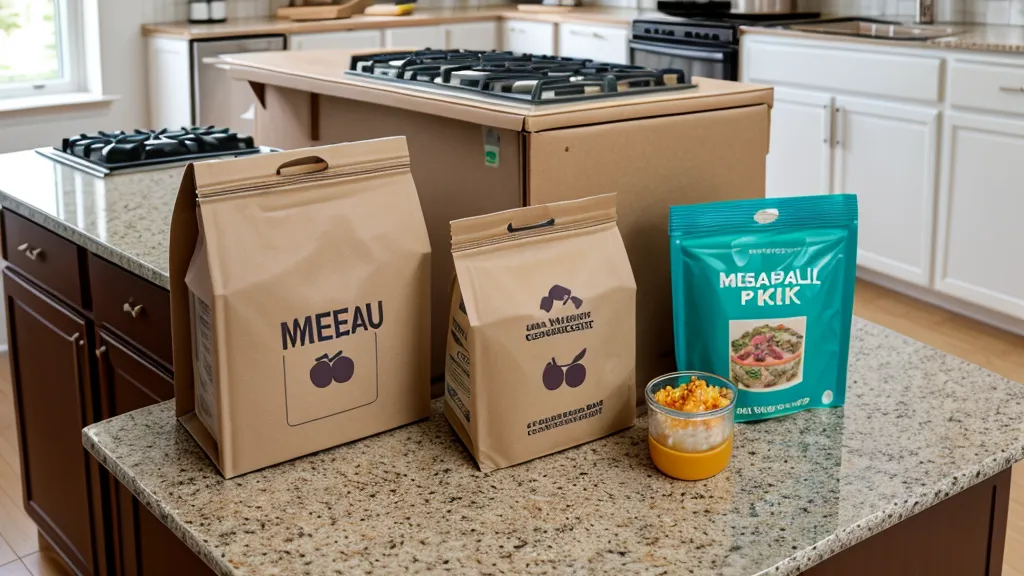
During school-play rehearsal season, our schedule had the least slack of the whole year, and that's exactly when I decided to attempt a Blue Apron recipe with three pans going at once. The card promised seared scallops with a pea puree, which looked lovely in the photos and required a kind of attention I did not have that week. My kindergartner launched the delivery box across the floor like a rocket mid-sear, I lost track of the pan for maybe ninety seconds, and the kitchen filled with enough smoke to set off a genuine debate about whether the alarm was actually working.
A reader named Augustin Guerrero emailed me not long after I wrote about that box. He works evenings, so his partner handles most of the actual cooking at their place, and even from that angle he'd clocked the same thing I had: Blue Apron is a from-scratch, ingredient-forward kind of box, built for a quiet Friday with a glass of wine, not a Wednesday with three pans and a kid using a delivery box as a prop. For weeks that look like that one, I've leaned on Thrive Market for pantry backup, with frozen options and jarred sauces that can be dinner in about ten minutes when even opening a meal kit box feels like too much work. The membership fee only makes sense once you're already leaning on it most weeks, which took me a rotation or two to admit. My full comparison is in Thrive Market vs Brand Name Groceries for Healthy Kid Snacks, if you're trying to fill the same pantry gaps we were.
Pause Beats Perfect
By midsummer I'd decided the single most important feature of any subscription wasn't the food, it was the pause button. Most services want five days' notice for any change, and a household of four doesn't run on five days' notice. A funeral, a work trip, a sick kid, any of it can upend a week with no warning, and a box of fresh produce arriving anyway is its own kind of waste, the expensive kind.
My coworker Cleo Rutkowski won't sign up for anything she can't cancel in under four clicks, and she was right to needle me about it. Pause is the feature that decides whether a subscription survives past month two, not the recipe photos. Home Chef stayed our default because the pause setting actually sticks and the app doesn't quietly reset your preferences the way some of the others do. If you're weighing options, I mapped the logistics in Meal Kit Services Compared: Price per Serving, Menu Size, and Pause Policy.

What Actually Stuck After Six Boxes
We still make a grocery run, milk, fruit, and the one cracker brand the youngest will actually touch, usually a fast lap through Hilldale on Midvale Boulevard rather than a full shopping trip, but the mental math of 'what's for dinner' most nights isn't ours to do anymore. That's not really about groceries being more or less expensive than a subscription, or one meal kit being objectively better value than another; it's about not having to decide from scratch on a Tuesday when the calls ran long. If there's one thing I'd tell another two-income household staring down its own cereal-at-the-counter night, it's this: don't pick a box for the recipes, pick it for how it behaves the week your schedule falls apart, because that week is coming regardless of which service you choose. Home Chef earned its spot in our rotation by being the one that didn't punish us for a chaotic week, and that's the whole test that actually matters.